

Creating quieter, more functional spaces for modern living
In today’s homes, noise control is no longer a luxury — it’s a necessity. With more families working, studying, and relaxing under the same roof, thoughtful acoustic design plays a key role in how comfortable and functional a home truly feels.
Whether it’s reducing distractions during work calls or creating separation between living and sleeping zones, smart design decisions can significantly improve sound control between rooms.
Why Acoustic Design Matters
A well-designed home isn’t just about how it looks — it’s also about how it sounds.
Poor acoustic planning can lead to:
Noise travelling easily between rooms
Disruptions during work or study
Reduced privacy between living areas
Overall discomfort in day-to-day living
For families and work-from-home setups, these issues quickly become noticeable.
Key Strategies to Reduce Noise Between Rooms
1. Smarter Wall Construction
One of the most effective ways to control sound is through how walls are built.
Use acoustic insulation within wall cavities
Consider double stud walls or staggered framing
Install sound-rated plasterboard for added density
These methods help absorb and block sound rather than allowing it to pass through.
2. Door Selection Matters
Internal doors are often overlooked but play a big role in sound control.
Opt for solid core doors instead of hollow ones
Ensure tight seals around door frames
Add door sweeps where needed
Even small upgrades here can make a noticeable difference.

3. Strategic Room Placement
Good design starts with smart planning.
Separate noisy zones (living, kitchen) from quiet zones (bedrooms, study)
Avoid placing bedrooms directly next to entertainment areas
Position home offices away from high-traffic spaces
This is one of the simplest yet most effective ways to manage noise.

4. Flooring & Soft Finishes
Hard surfaces reflect sound, while softer materials help absorb it.
Use carpet or rugs in bedrooms and living areas
Add curtains, upholstered furniture, and wall panels
Consider acoustic underlays for timber or tile flooring
These elements reduce echo and improve overall sound quality within a space.
5. Ceiling & Floor Separation
In double-storey homes, noise transfer between levels is a common issue.
Install acoustic insulation between floors
Use resilient mounts or acoustic battens
Add thicker ceiling linings where possible
This helps minimise footsteps and airborne noise from above.

6. Sealing Gaps & Openings
Sound travels through even the smallest gaps.
Seal around power points, vents, and skirting
Use acoustic sealants where needed
Ensure windows and doors are properly fitted
It’s a simple step that’s often missed but highly effective.
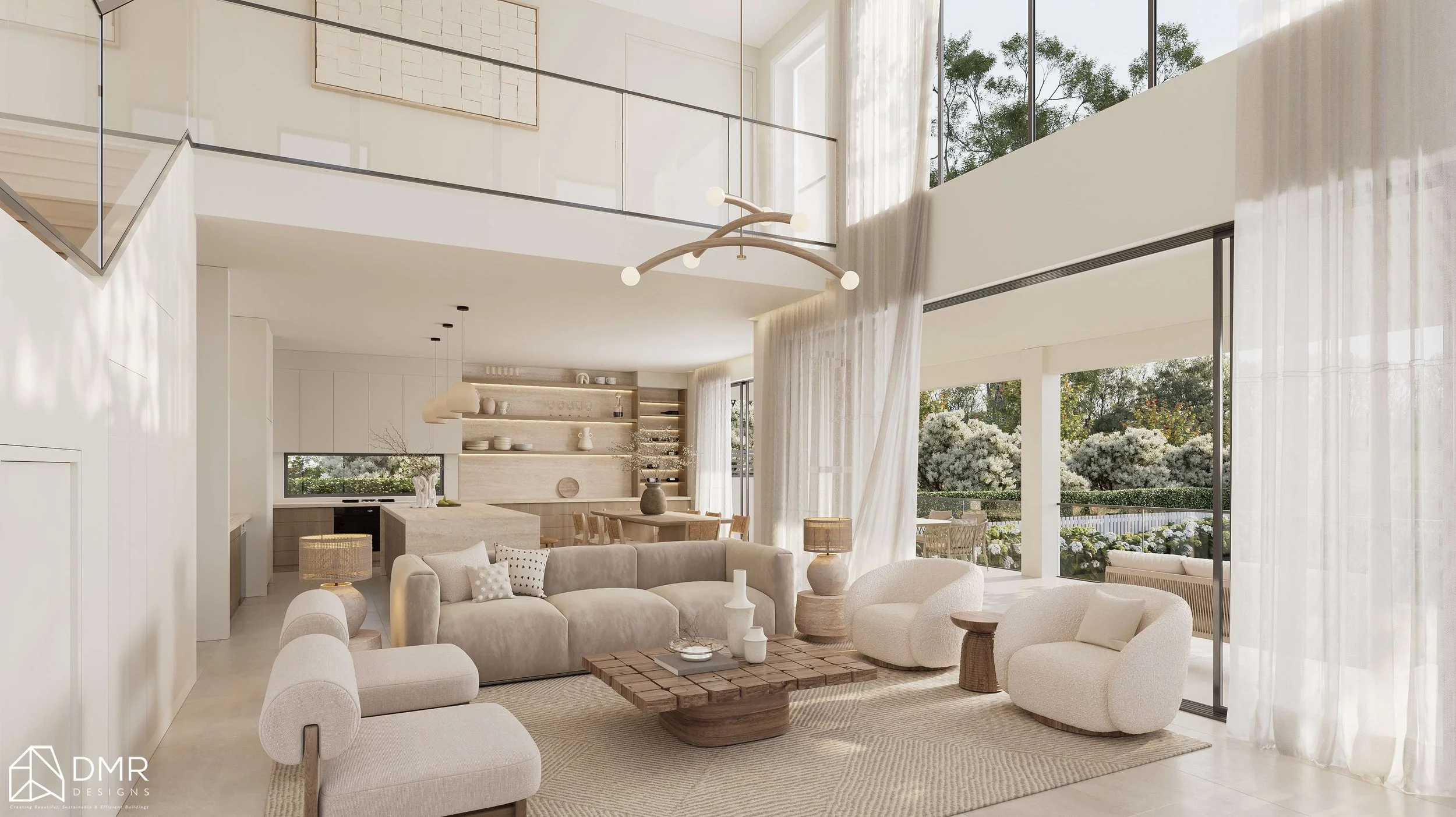
Designing for Real Life
At DMR Designs, we approach acoustic design as part of the bigger picture — creating homes that not only look great but function seamlessly for everyday living.
Whether you’re planning a new build or refining an existing layout, considering how sound moves through your home can dramatically improve comfort, privacy, and usability.

Final Thoughts
A quieter home is a better home.
With the right design strategies, you can:
Improve focus and productivity
Enhance privacy for every family member
Create a more peaceful living environment
Acoustic design isn’t just technical — it’s about designing spaces that truly support the way you live.
Thinking about building or renovating?
Our team can help you design a home that balances aesthetics, functionality, and acoustic comfort from the ground up.